Description
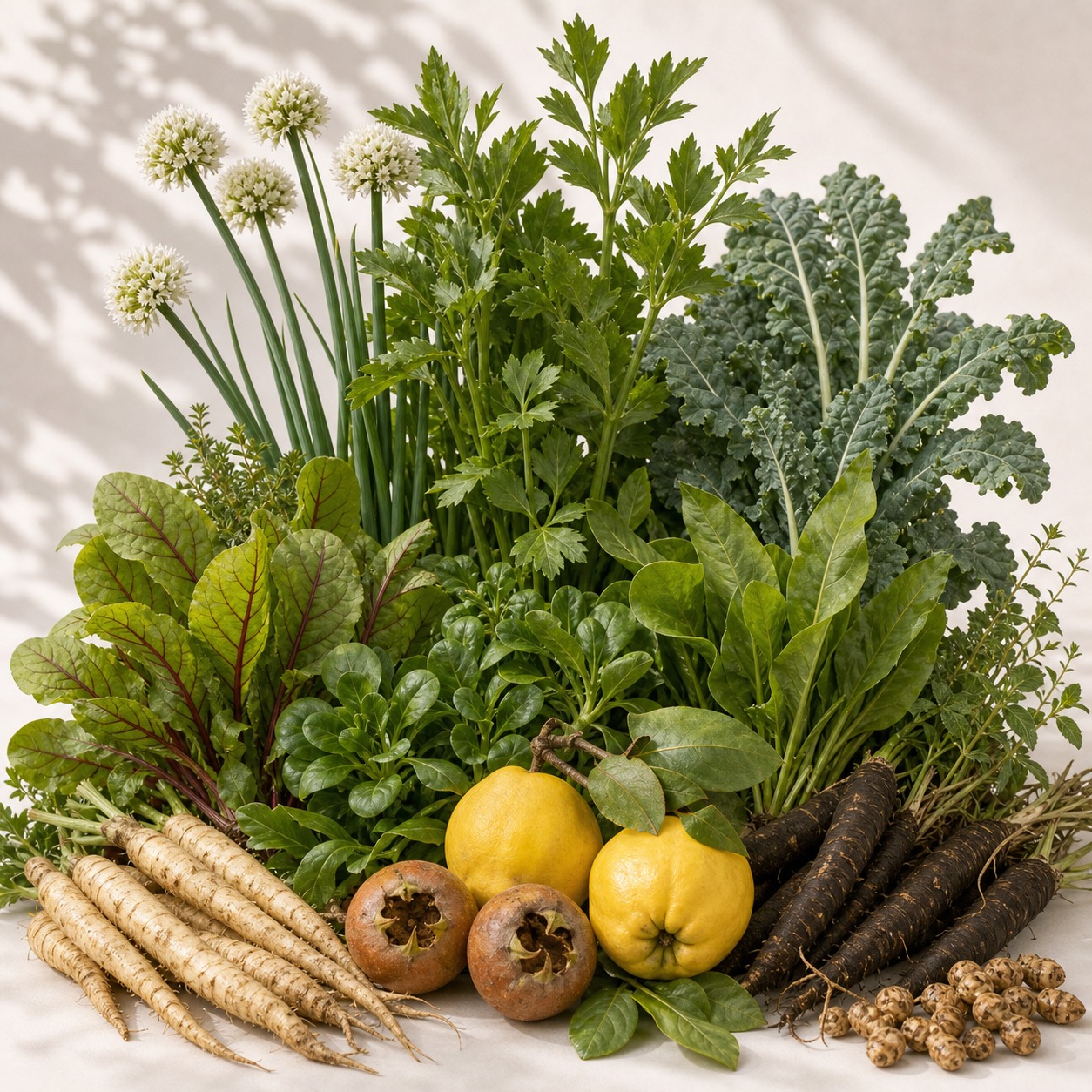
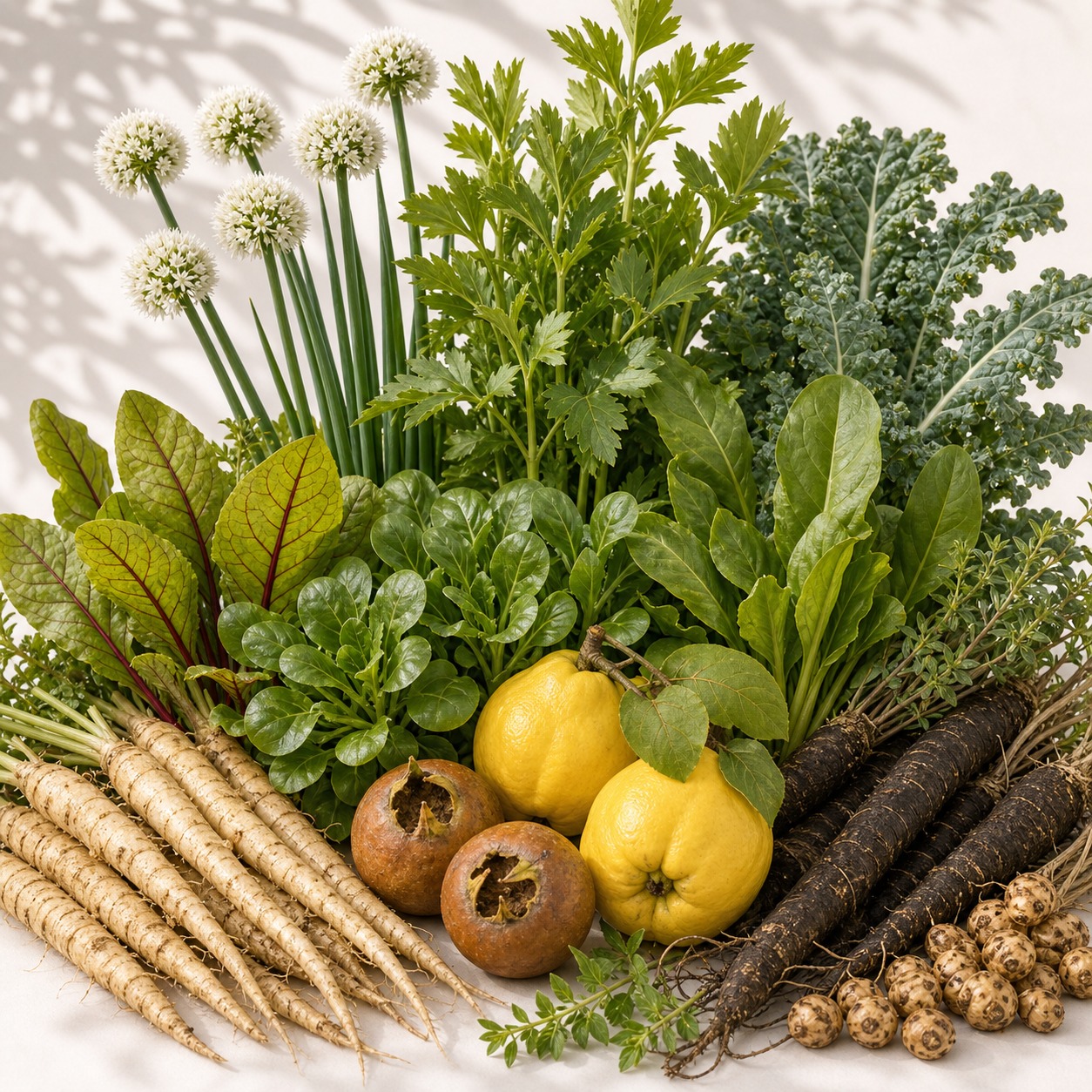
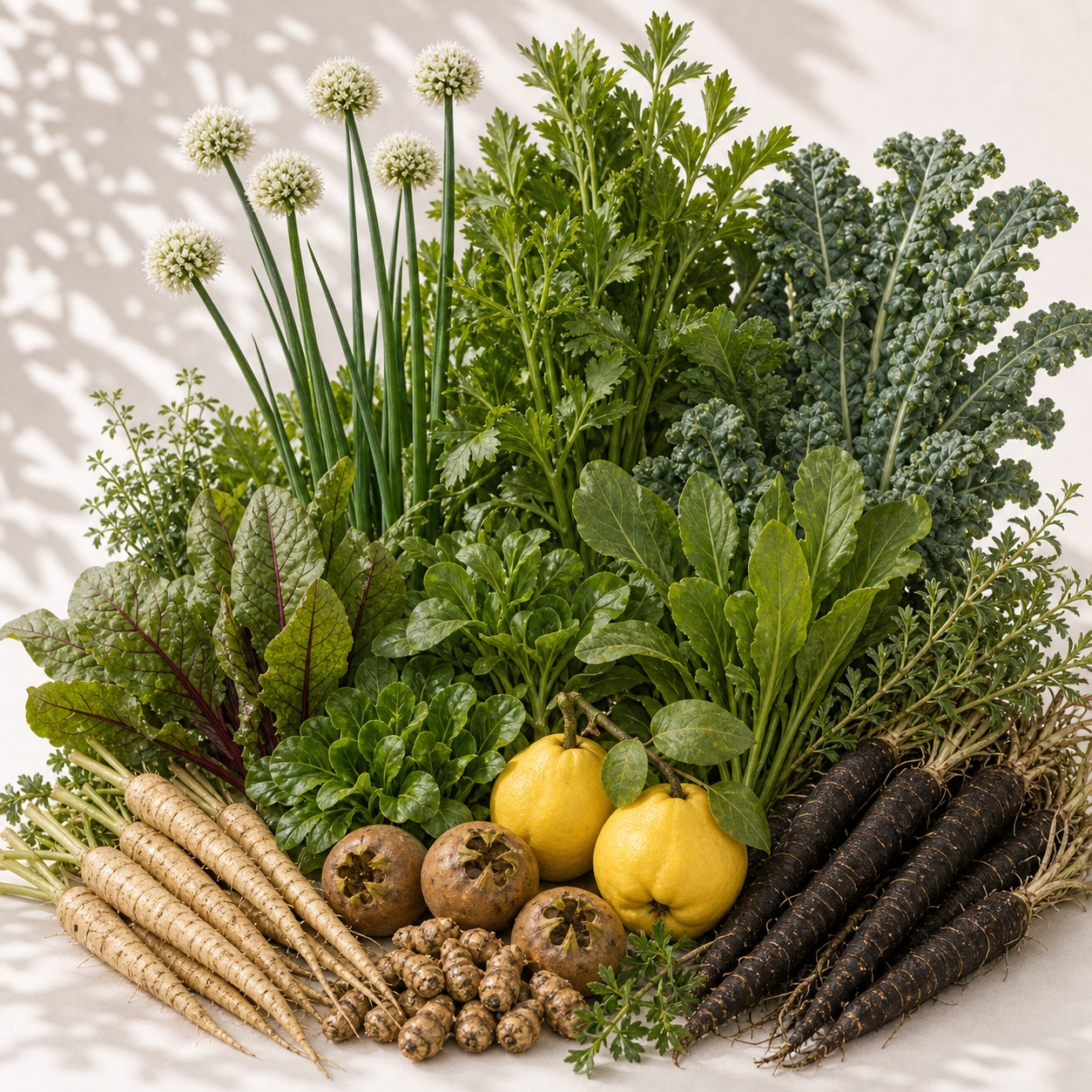
Medieval Food Forest Box Seeds gathers rare and useful heritage edibles into one resilient garden collection. Inspired by monastery gardens, village kitchen plots, and old-world food forests, this 12-variety box combines sustaining roots, perennial greens, herbs, onions, tubers, and fruiting crops for gardeners building long-lived edible landscapes.
Why Grow It
- Curated 12-variety edible seed collection inspired by medieval food forests and heritage kitchen gardens.
- Includes approximately 1,200 total seeds across individually packaged varieties with growing instructions.
- Built around hardy greens, roots, herbs, onions, tubers, and fruiting trees suited mainly to zones 4-9.
- Medlar seed is included only in this Medieval Food Forest Box selection.
- Covers both quick seasonal greens and long-term perennial or woody crops for layered edible landscapes.
Included Varieties
- Salsify (Tragopogon porrifolius) – 50 seeds
- Black Salsify / Scorzonera (Scorzonera hispanica) – 100 seeds
- Good King Henry (Blitum bonus-henricus) – 50 seeds
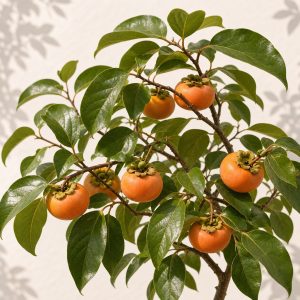
- Medlar (Mespilus germanica) – 10 seeds
- Welsh Onion (Allium fistulosum) – 100 seeds
- Sea Kale (Crambe maritima) – 10 seeds
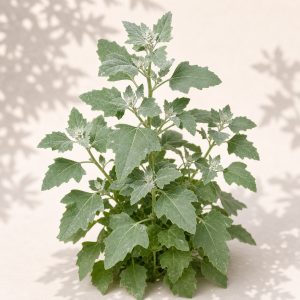
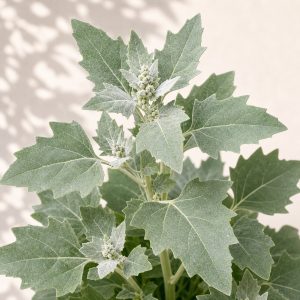
- Fat Hen (Chenopodium album) – 100 seeds
- Lovage (Levisticum officinale) – 50 seeds
- French Corn Salad / Mache (Valerianella locusta) – 200 seeds
- Tiger Nuts (Cyperus esculentus) – 20 seeds
- Quince (Cydonia oblonga) – 10 seeds
- Broad-Leaved Sorrel (Rumex acetosa) – 500 seeds
Growing Information
| Botanical name | Mixed edible collection: see 12 included varieties |
|---|---|
| Life cycle | Mixed annual, perennial, tuber, root, herb, green, onion, and woody food crops |
| Mature height | Varies by variety, from low salad greens to shrubs and fruit trees |
| Light | Full sun to partial shade, depending on crop |
| Bloom or harvest window | Harvest windows vary from cool-season greens to roots, tubers, herbs, and later fruit-tree crops |
| Seed count | Approximately 1,200 seeds across 12 varieties |
| Collection character | Mixed heritage edible greens, roots, herbs, onions, tubers, and fruiting crops |
| Sowing advice | Follow the individual packet directions. Direct sow hardy greens and roots in the recommended season; cold stratify medlar and quince; scarify and cold stratify sea kale; plant tiger nuts after soil warms in cold climates. |
| Spacing | Varies by crop; sow salad greens closer, roots in rows, herbs and perennial vegetables with room to mature, and woody quince or medlar with orchard-scale spacing. |
| Germination | Varies by species. Some annual greens germinate quickly, while sea kale, quince, medlar, and other perennial crops may be slow, uneven, or cold-dependent. |
Best For
- food forest planting
- perennial edible gardens
- heritage vegetable trials
- homestead resilience gardens
- medieval garden themes
- giftable seed collections
Packet Details
Includes a black gift box with individually packaged seed varieties and growing instructions, with approximately 1,200 total seeds. Store seeds cool, dry, and dark until sowing, and keep each variety labeled because treatment and timing differ across the collection.
FAQ
How many varieties are included?
The box includes 12 seed varieties: salsify, black salsify, Good King Henry, medlar, Welsh onion, sea kale, fat hen, lovage, French corn salad, tiger nuts, quince, and broad-leaved sorrel.
How many seeds are in the collection?
The source listing describes approximately 1,200 total seeds across the individually packaged varieties.
What zones is this collection intended for?
It is intended mainly for zones 4-9, with tiger nuts noted as warm-season in colder zones and best suited to zones 7-11 when grown as a perennial-type crop.
Do all varieties germinate the same way?
No. Some crops can be direct sown, while sea kale benefits from scarification plus cold, quince and medlar need cold stratification, and perennial greens may be slower or uneven.
Reviews
There are no reviews yet.