Description
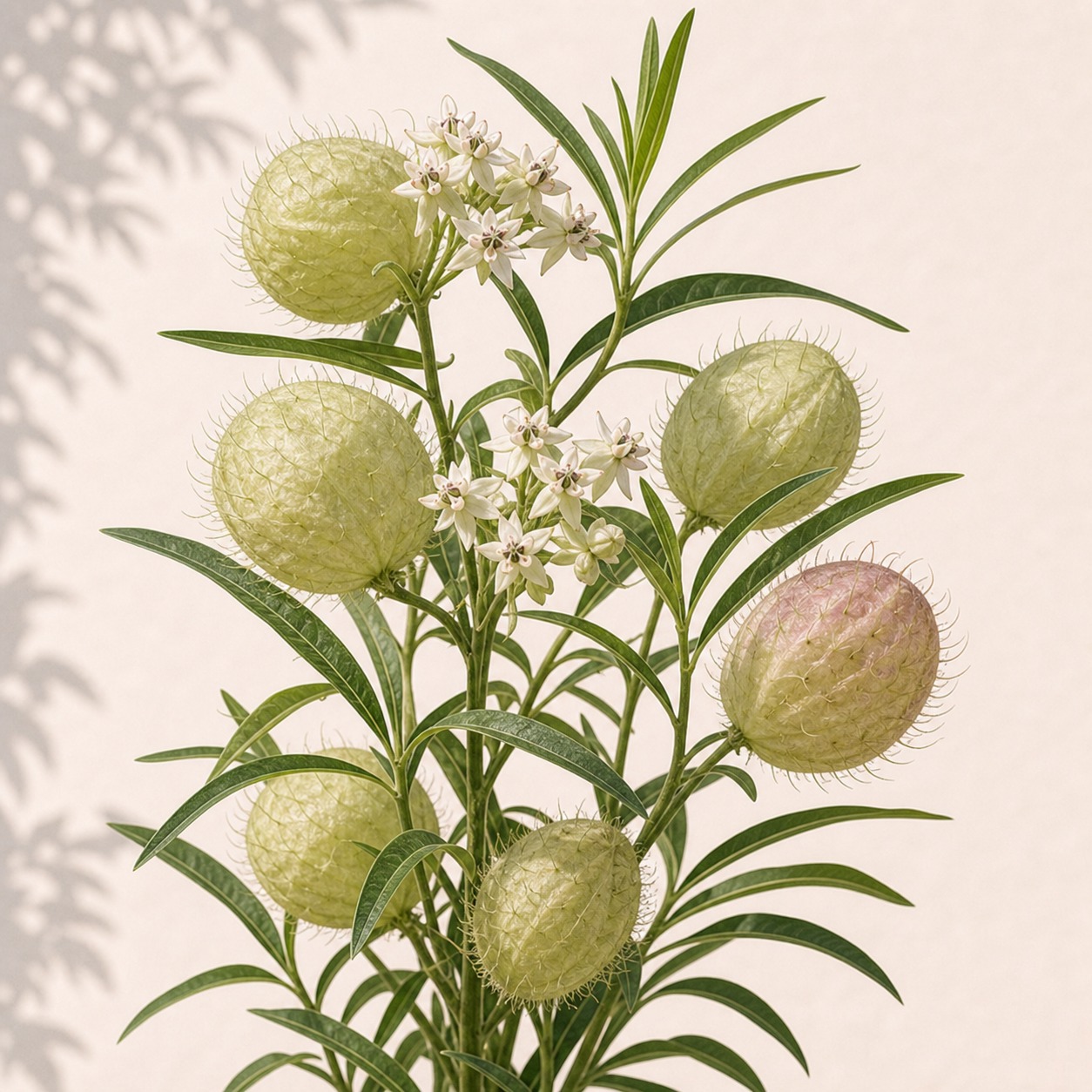
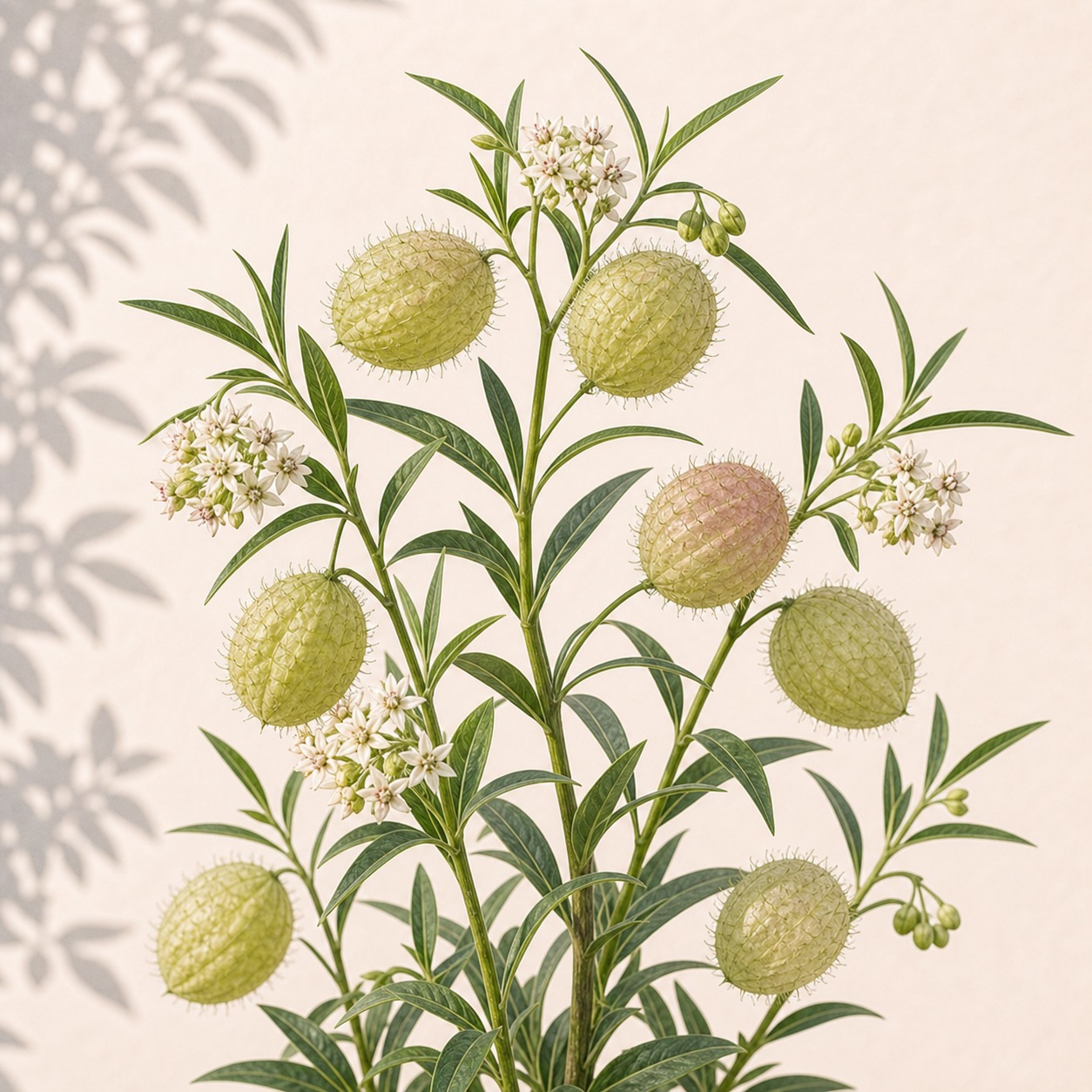
Hairy Balls Milkweed, also called Balloon Plant, is an unusual ornamental milkweed grown for both delicate white-blush flower umbels and inflated, spiky pale green pods. The tall, airy plants support monarch caterpillars and bring sculptural texture to pollinator gardens, cut-flower rows, and dried arrangements.
Why Grow It
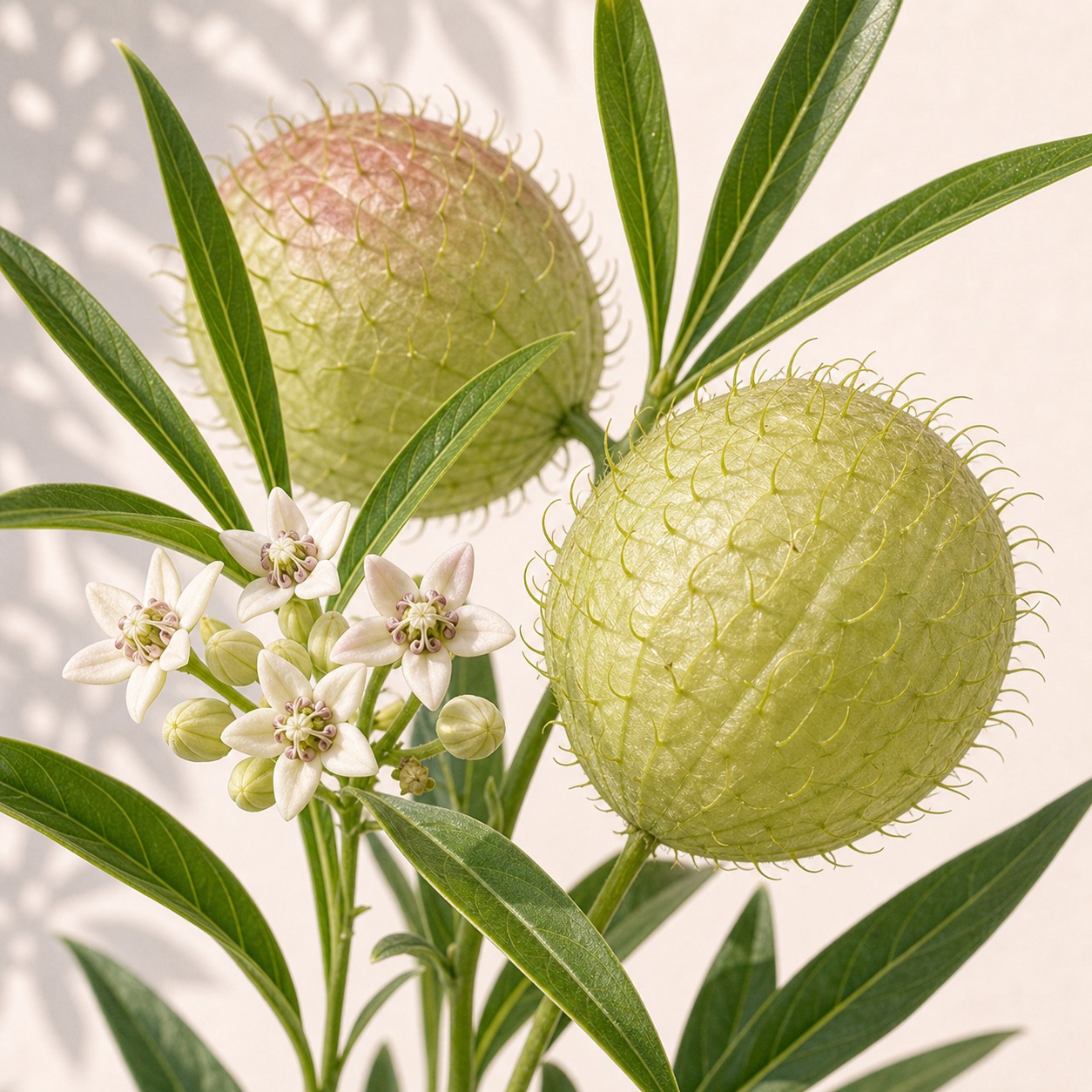
- Distinctive balloon-like pale green seed pods with soft spines.
- White to blush star-shaped milkweed flowers attract butterflies and beneficial insects.
- Excellent monarch host plant in warm-season pollinator gardens.
- Tall 3-6 ft. stems add airy architecture to cut or dried arrangements.
Growing Information
| Botanical name | Asclepias physocarpus (also known as Gomphocarpus physocarpus) |
|---|---|
| Life cycle | Tender perennial in zones 8-13; grown as an annual elsewhere |
| Mature height | 3-6 ft. |
| Light | Full sun |
| Bloom or pod window | Summer flowers followed by inflated ornamental seed pods |
| Flower and pod color | white to blush star-shaped flowers and pale green spiky balloon pods, sometimes blushed pink |
| Seed count | 10 seeds |
| Sowing advice | Start indoors 6-8 weeks before last frost or sow outdoors after frost when soil is warm. Sow shallowly in a warm, moist, well-drained mix and transplant after seedlings are sturdy. |
| Spacing | Space plants 24-36 in. apart to allow tall branching stems and airy seed pods to develop. |
| Germination | Usually 10-21 days in warm, evenly moist conditions; warmth improves milkweed germination and early growth. |
Best For
- monarch host plantings
- pollinator gardens
- cut flower rows
- dried pod arrangements
- unusual ornamental beds
Packet Details
Includes 10 seeds. Store seeds cool, dry, and dark until sowing. Use the growing table above as a planning reference for your local season.
FAQ
Is Hairy Balls Milkweed edible?
No. Grow this as an ornamental milkweed and monarch host plant, not as an edible crop. Milkweed sap can irritate skin and plants should not be eaten.
Is it perennial?
It is a tender perennial in zones 8-13 and is commonly grown as an annual in colder climates.
What makes the seed pods distinctive?
The pods inflate into round pale green balloons with soft spines, sometimes showing pink blush, and are popular for fresh and dried floral work.
Reviews
There are no reviews yet.