Description
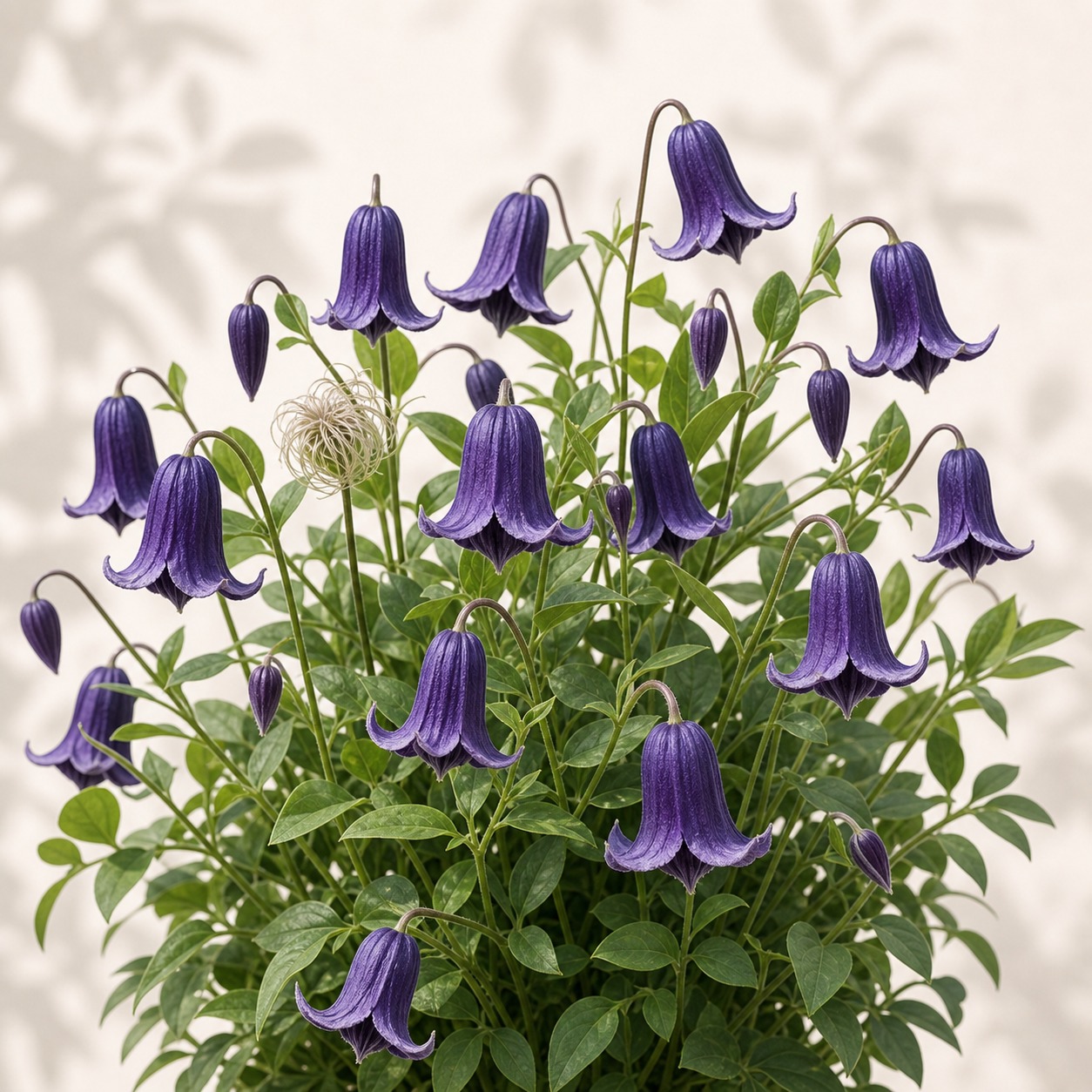
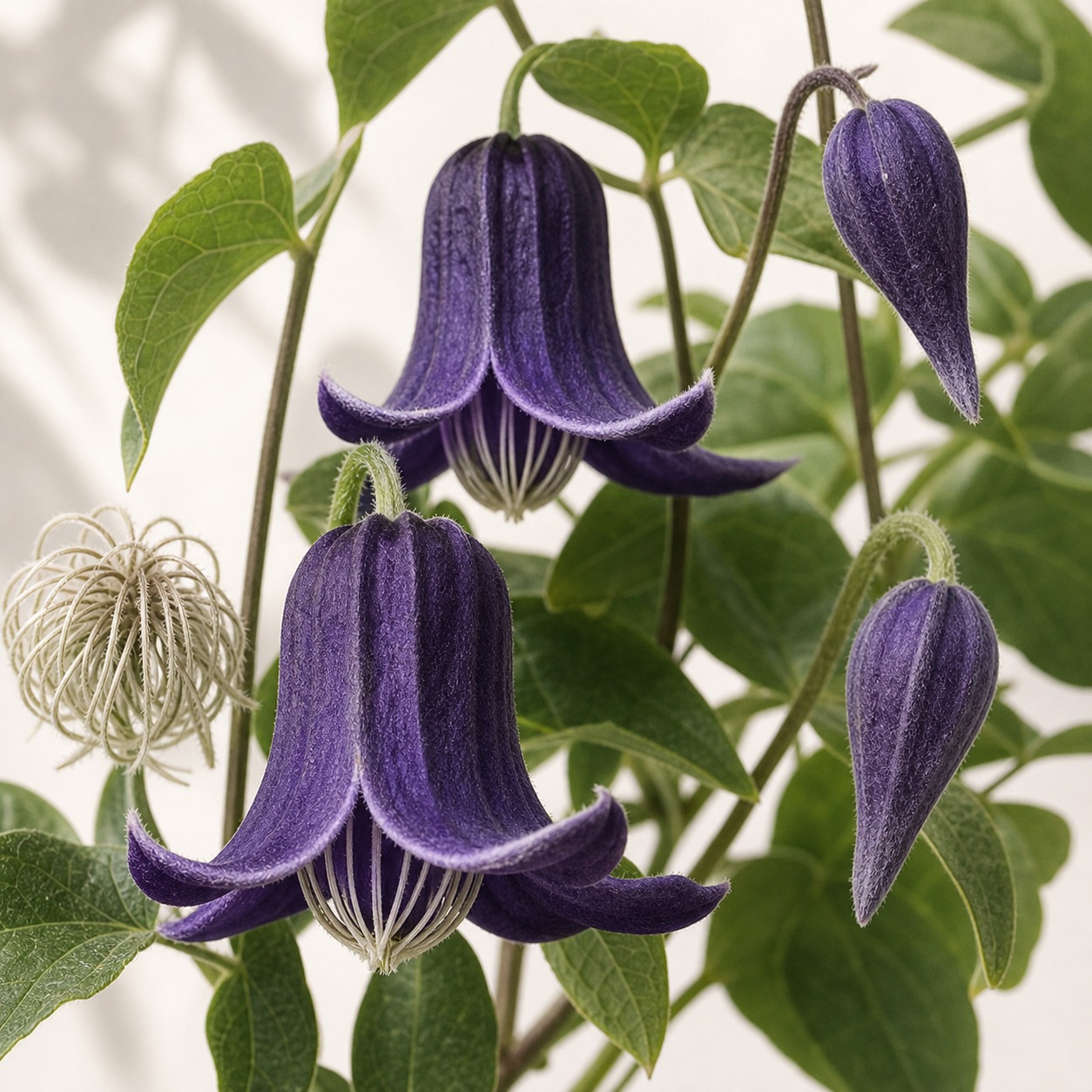
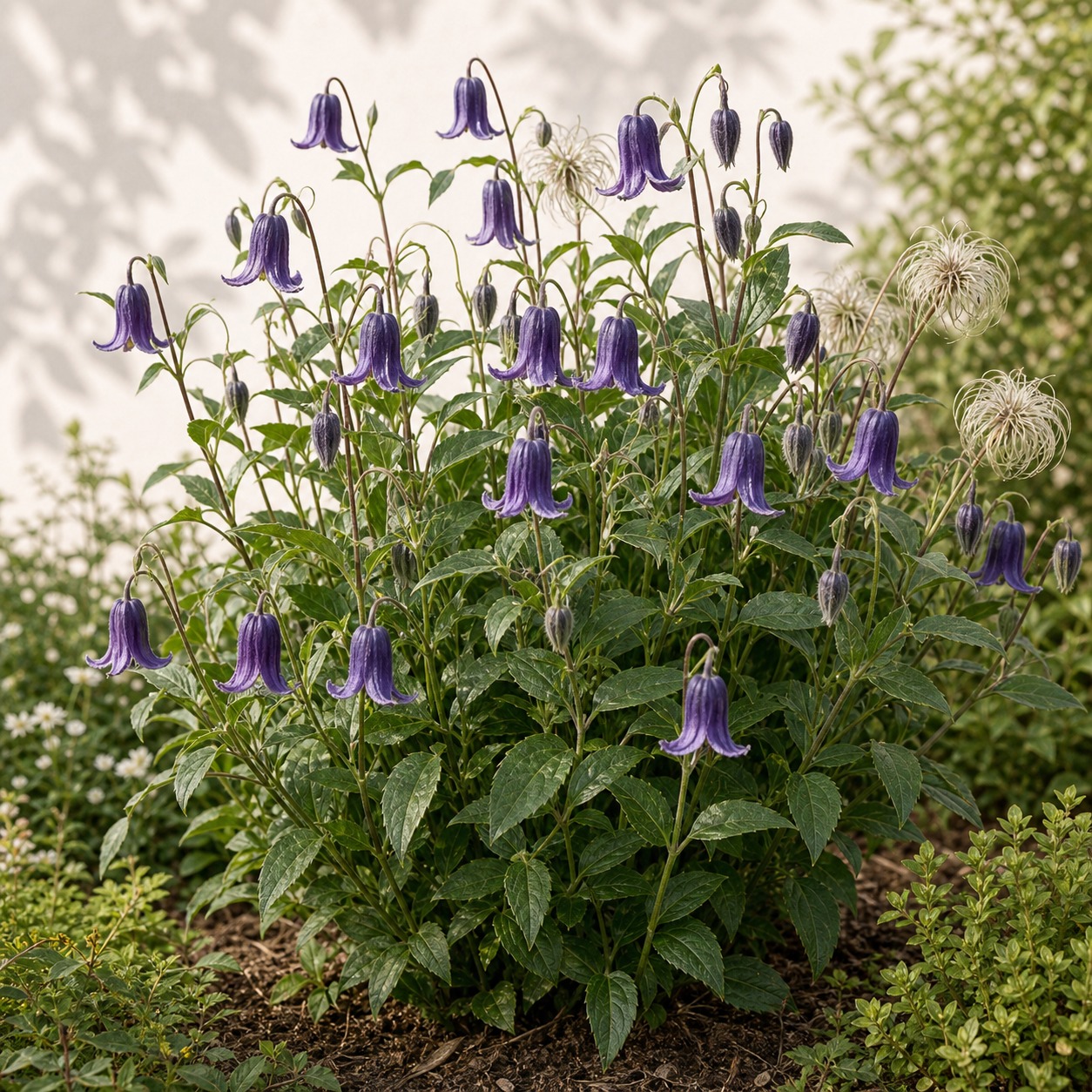
Witches Hat Clematis is a darkly charming form of Clematis integrifolia, the solitary or bush clematis. Unlike climbing clematis, this hardy perennial grows as an upright, non-climbing plant with dusky downward buds, deep blue-violet bell-shaped flowers, and silvery tangled seed heads that extend the display into autumn.
Why Grow It
- Bushy, non-climbing Clematis integrifolia for borders rather than trellises.
- Dusky buds hang downward like little pointed hats before opening into deep blue-violet to indigo bells.
- Compact 18-30 in. perennial stems fit moody borders, cottage gardens, and smaller perennial beds.
- Silvery tangled seed heads add ghostly texture after early-to-midsummer bloom.
- Seeds require 90 days of cold stratification or fall sowing for best germination.
Growing Information
| Botanical name | Clematis integrifolia |
|---|---|
| Life cycle | Hardy non-climbing perennial in zones 3-8 |
| Mature height | 18-30 in. |
| Light | Full sun to partial shade |
| Bloom or harvest window | Early to midsummer, followed by silvery ornamental seed heads into autumn |
| Seed count | 10 seeds |
| Sowing advice | Cold stratify for 90 days before sowing, or sow outdoors in fall. For refrigerator stratification, fold seeds into a moist paper towel, seal in a bag, chill for 90 days, then sow in a fine, well-drained seed mix. |
| Spacing | Space plants about 18-24 in. apart in borders so the bushy non-climbing stems can stand naturally. |
| Germination | Germination can be slow and uneven after cold stratification; keep the seed mix evenly moist, well-drained, and patient. |
Best Uses
- moody perennial borders
- cottage garden plantings
- dark-toned flower beds
- ornamental seed head interest
- well-drained sunny to part-shade gardens
- pollinator-friendly perennial plantings
FAQ
Is Witches Hat Clematis a climbing vine?
No. This is Clematis integrifolia, a bushy non-climbing clematis that grows upright on 18-30 in. stems.
Do these seeds need cold stratification?
Yes. Give the seeds about 90 days of cold moist stratification, or sow outdoors in fall so winter provides the chilling period.
Where should I plant it?
Plant in well-drained soil with roots kept cool and shaded while the top growth receives full sun to partial shade.
What happens after flowering?
After the early-to-midsummer bell-shaped blooms, plants form silvery tangled seed heads that add ornamental interest into autumn.
Reviews
There are no reviews yet.